



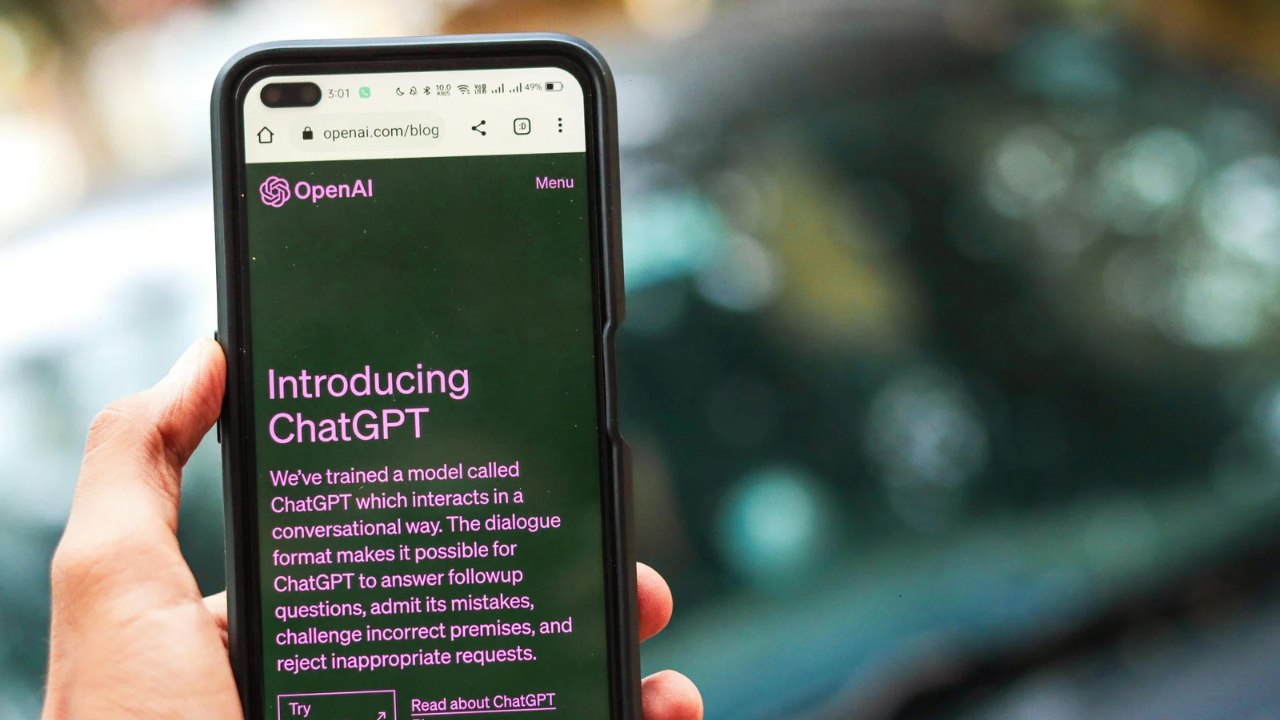
Picture a typical week for a healthcare tender team leaning on a general-purpose AI assistant.
The tender lands: 50 documents, some over 200 pages, in half a dozen formats. The team uploads them and asks the AI to pull out every question and requirement. A tidy list comes back but the hard part is knowing what is not on it. Requirements hide deep within documents and the chat window does not point to where each item came from. So, someone still needs to open every document to check the list against the source, because one missed requirement can disqualify the bid. Then someone searches last year’s submissions for a usable answer, chases the latest version of a spec sheet, and pings five colleagues for input. Then they wait, and chase again as the deadline closes in. The chat window helps with the sentence, but does nothing for the other to-dos around it. Gather, format, review, repeat, until it’s right or until the night shift is the only time left. Submit, and immediately start the next one.
None of this is exaggerated for effect. One pharma customer told us their tenders average 58 documents, drawn from 18 document types owned by 8 to 10 internal functions. Another said tenders in France can need more than 100. At that scale, drafting any single answer is the smallest part of the job.
We want to be realistic
General-purpose models like Claude are impressive text generators. Dismissing this ability would be shortsighted and leaving a lot of efficiencies on the table. The real issue is whether they understand the domain they are writing for. The problems starts when you transition from drafting individual paragraphs or answering separate questions to orchestrating a multi-document submission under a strict regulatory deadline in a very specific and complex market like pharma or med-tech.
Four structural gaps separate a general-purpose model from an agent built to respond to pharma & medtech tenders end to end.
No tender-specific data foundation:
A general model knows language. It has no built-in knowledge of which tenders exist in a market, what similar bids were awarded for, or how procurement reality differs between a hospital tender in Germany and a framework agreement in the Italy. Without a grounded data layer (publications, award outcomes, net pricing, product-level detail), every answer it gives on specifics is not a fact. That produces hallucinations and invented data points. The model writes fine, but nothing sits underneath it to check against, starting with what happens in the market.
It also knows nothing about the company it is writing for. A tender question rarely says everything it needs to. For example, ask a chat window for the certificates of the board members and it cannot know which of a company’s ten legal entities the tender means. Ask about a catheter and it cannot know which catheter. A system built for tenders carries that context with the question: the lot, the product, the legal entity. It then answers from the company’s own library of documents and past tender answers instead of a generic source.
No deep domain knowledge:
Healthcare tendering is different than construction or aerospace. The organizations involved, the roles inside a hospital or ministry procurement process, recurring market archetypes, and the regulatory frameworks that shape how a bid is structured. Ask a generic AI how hospital tenders in Italy weigh price against quality, and you’ll get a reasonable answer about EU procurement rules. What it can’t tell you is how this specific buyer scored its last three tenders for your product. A tender team needs to know the buyer it’s bidding to, not the textbook rules.
No workflow integration:
Yes, general AI tools can now remember your files. But they keep old and new versions side by side, and nothing flags which one is outdated. So last year’s certificate can still end up in this year’s answer. The work around the answer also stays outside the tool. Answers get copied from a chat window into the submission. Questions get assigned to Legal and tracked through Slack threads. Again, a real customer pain to support this: One client counted 120 emails and 60 Teams messages on a single tender. The coordination problem the AI was meant to solve is still there, just relocated.
No enterprise-grade security:
A regulated industry needs business logic, audit trails, security and compliance standards, and professional support before it trusts a system in production. Not all of that comes with a general chat interface. Building it is possible, but it’s a serious infrastructure investment, and the maintenance lands on the buying team instead of the vendor.
Put together, this is what makes general-purpose AI feel fast in the moment and slow in practice. Every gain from a well-written answer gets lost into the document-hunting and manual checking around it.
Every tender starts from the same blank slate as the last one.
What carries forward in a purpose-built system is that library of company documents and past tender answers. Its value shows up once you look at what a tender asks a company to submit.
And we have a real life example on that:
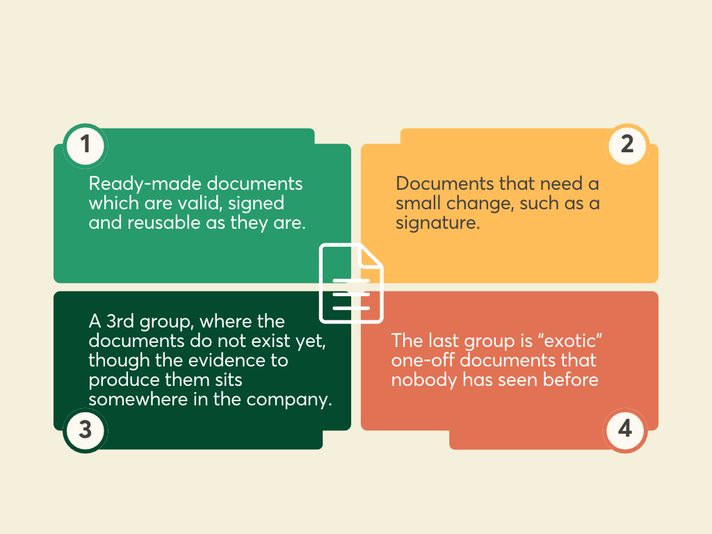
We asked a Pharma customer and they sorted submission documents into 4 groups.
A purpose-built system changes where the team spends its time efficiently and effectively
The first two groups are the bulk of most submissions. Each document is simple on its own, but across 58 of them, finding the current version takes days, and one expired certificate can disqualify a bid. A general AI connected to a shared drive can search for them, but it can’t tell the current version from last year’s. A system built on a tender library pulls the right material, flags outdated versions, and shows where each one came from. The signature still takes people but the hunting for it does not.
The third group needs a draft built from real internal evidence. Any AI is only as good as the evidence it has, but a general model sounds just as sure when that evidence is thin. A confidence score shows the expert where to look first, so they edit a draft instead of writing from scratch.
The one-offs come down to coordinating many experts. No model removes that, so a purpose-built system assigns and tracks the work across the right subject-matter-experts and approvers.
Then the groups start to shift. Once an expert validates a document, it goes into the library and becomes a ready-made document for the next tender. A one-off answered once is no longer a one-off. Every tender leaves less work for the next one.
So what is the ultimate differentiator?
A general-purpose model will always be a capable writer. Whether a tender response is fast and trustworthy depends on what sits underneath: the data it’s grounded in, the domain knowledge it reasons with, the workflow it lives inside, and the traceability around it before it reaches a reviewer’s desk. Yes, the uman expert will still be there, but he will be there to check a sourced draft instead of writing every answer from scratch.
This is the foundation behind Clara, the AI agent Cube RM built for tender response in pharma and medtech. Clara works from a Knowledge Library that holds a company’s documents and the answers from its previous tenders. It combines domain-specific healthcare models with over 5 years of global data across 75+ countries. And it drafts each answer first, with its source and a confidence score. The subject-matter expert reviews and validates instead of writing from scratch.
Curious how a purpose-built tender agent operates in practice? Book a demo here

 27/02/2026